
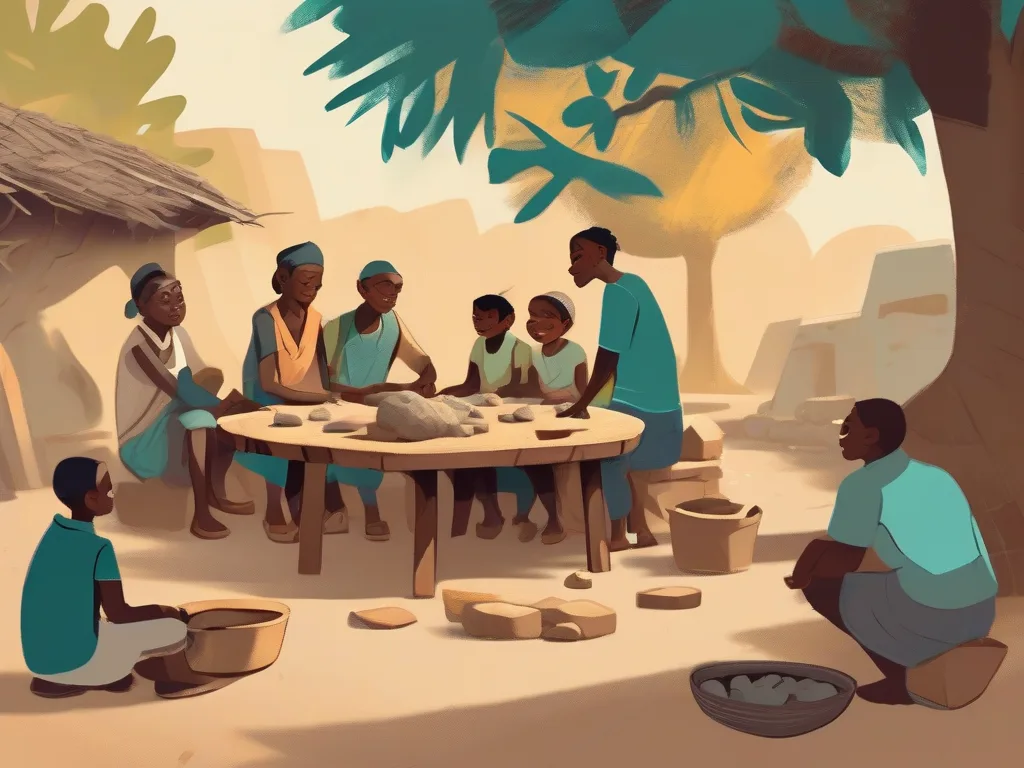
Every drought begins before anyone notices. A dog drinks longer. A leaf turns early. A woman looks at the sky and says nothing. Small signs precede big changes.
The village had one well. When it failed, the committee met under the mango tree. Six people, one table, and a problem bigger than all of them.
Mrs. Adeyemi, the oldest, opened the meeting. "We cannot wait for rain," she said. "We must devise a plan."
They talked until the light turned orange. The river was far away, and the old channel was broken. But the channel had once carried water to the gardens. Why not again?
"We can adapt it," said the teacher. "We do not need a new river. We need to repair the old path."
The committee agreed. They would adopt a rule: every family would give one hour of work each week. No one would be paid. Everyone would eat.
They would proceed slowly. First the soil. Then the stones. Then the water. They would not dig in the heat of the day, and they would not promise more than they could do.
The work was hard. Some people complained. Others brought food. The children carried stones in small baskets. At night, the committee counted what they had done and what was left.
When the water reached the gardens, it did not end the drought. But it helped alleviate the worst of it. The beans grew. The children drank. The village had time to think.
The next year, the rain came late again. This time, no one waited for the well to fail. The committee was already working.
"The words precede the water," Mrs. Adeyemi said. "First we name the problem. Then we change the plan. Then we act."
I have never forgotten her. A plan, she taught us, is a small kind of rain.
A thought to keep
First name the problem. Then change the plan. Then act.