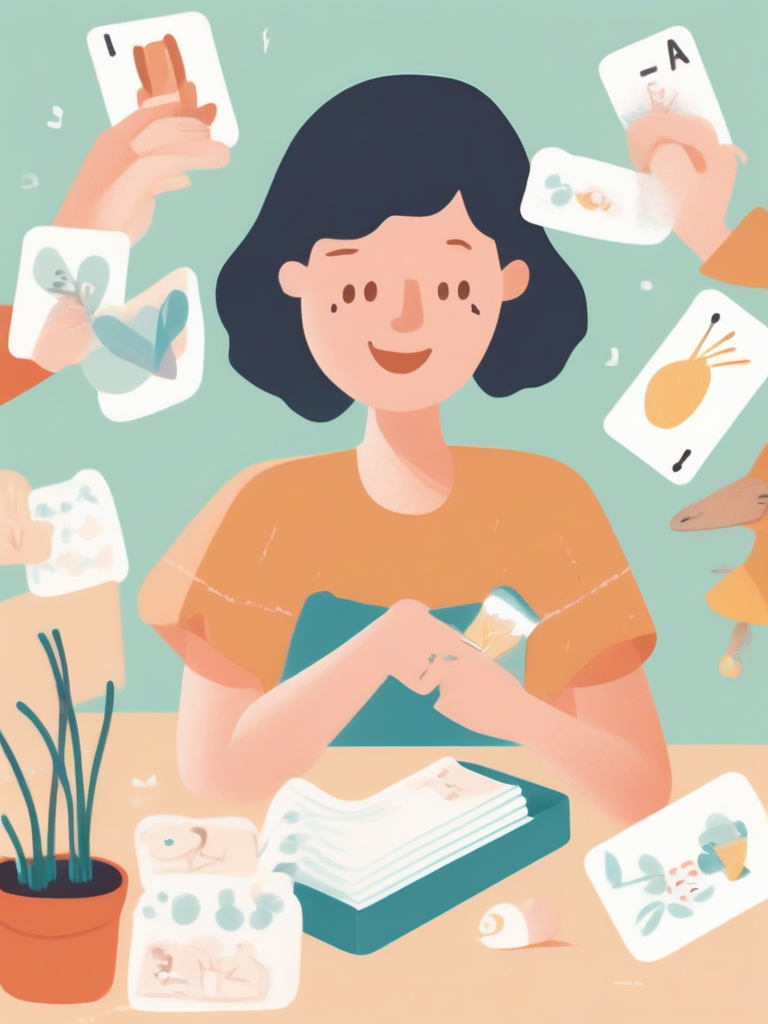
Flashcards are popular, and easy to misuse. Many learners make two hundred cards and stop after a week. Used well, a small deck teaches more than a big one.
One card, one idea
Write one word or phrase. Do not put three meanings on one card.
borrow — to take and give back
Use a sentence
Add a short sentence from your own life.
Can I borrow your pen?
Write the English first
Do not start with your language. Start with the English word, and think of the meaning.
Review on day 1, 3, 7
Three short reviews beat one long one. Say the word out loud each time.
Say it, do not only read it
A card is not a picture. Your mouth must move.
Delete cards you know
When a card is easy, remove it. A deck of twenty useful words is enough.
Keep it small
Ten new cards a week. Not a hundred.
Words to remember
- flashcard — a small card with a word on it
- review — to look at something again
- deck — a set of cards
- meaning — what a word tells you
Questions & answers
Q: Paper or app?
Either. Paper is slower, and slow helps memory. Apps are easier to carry.
Q: How many cards a day?
Ten new cards, plus review. Twenty minutes is enough.
Q: Should I write my language on the back?
You can, but try a picture or an English example first. Translation is a shortcut, not a road.
Q: Why do I forget cards I reviewed?
You reviewed once. Review again on day three and day seven.
Q: Can I make cards for grammar?
Yes, for one pattern: "I have lived here for three years." One pattern, one card.